
By Five O’Clock My Shoulders Were Up Around My Ears. This Simple, Old-Fashioned Comfort Changed My Evenings.
I never thought a stiff neck and a tight back were worth fussing about. Then the clocks went back, the house got chilly, and I realised how much of every evening I spent bracing against it. Here is the whole story, including what didn’t work.

Five o’clock at the kitchen table
I do the books for a few small local firms, part-time, from the kitchen table. It’s a good job and I’m grateful for it. But a kitchen chair was never designed for four hours of spreadsheets.
By late afternoon, my shoulders had crept up towards my ears, my neck felt like a tight rope, and there was a dull ache low in my back that I had learned to ignore. I’d make another cup of tea, roll my shoulders, and carry on.
My husband Pete would put his head round the door and say, “You’re hunched again, love.” I would say I was fine. I wasn’t, quite.
It wasn’t dramatic. It was constant.
It’s the kind of thing you don’t think counts as a “proper” problem. No injury, no diagnosis, just a background grumble of tension that came with me from the table to the sofa. And once October arrived and the house went chilly by teatime, everything felt tighter still.
- AfternoonsTight neck and shoulders, and a stiff lower back from sitting too long.
- EveningsSitting on the sofa in a coat of tension, shoulders up, never quite warm.
- NightsShifting about, trying to find a position that didn’t pinch.
- MorningsStiff and slow for the first few minutes.
The hot water bottle that never lasted
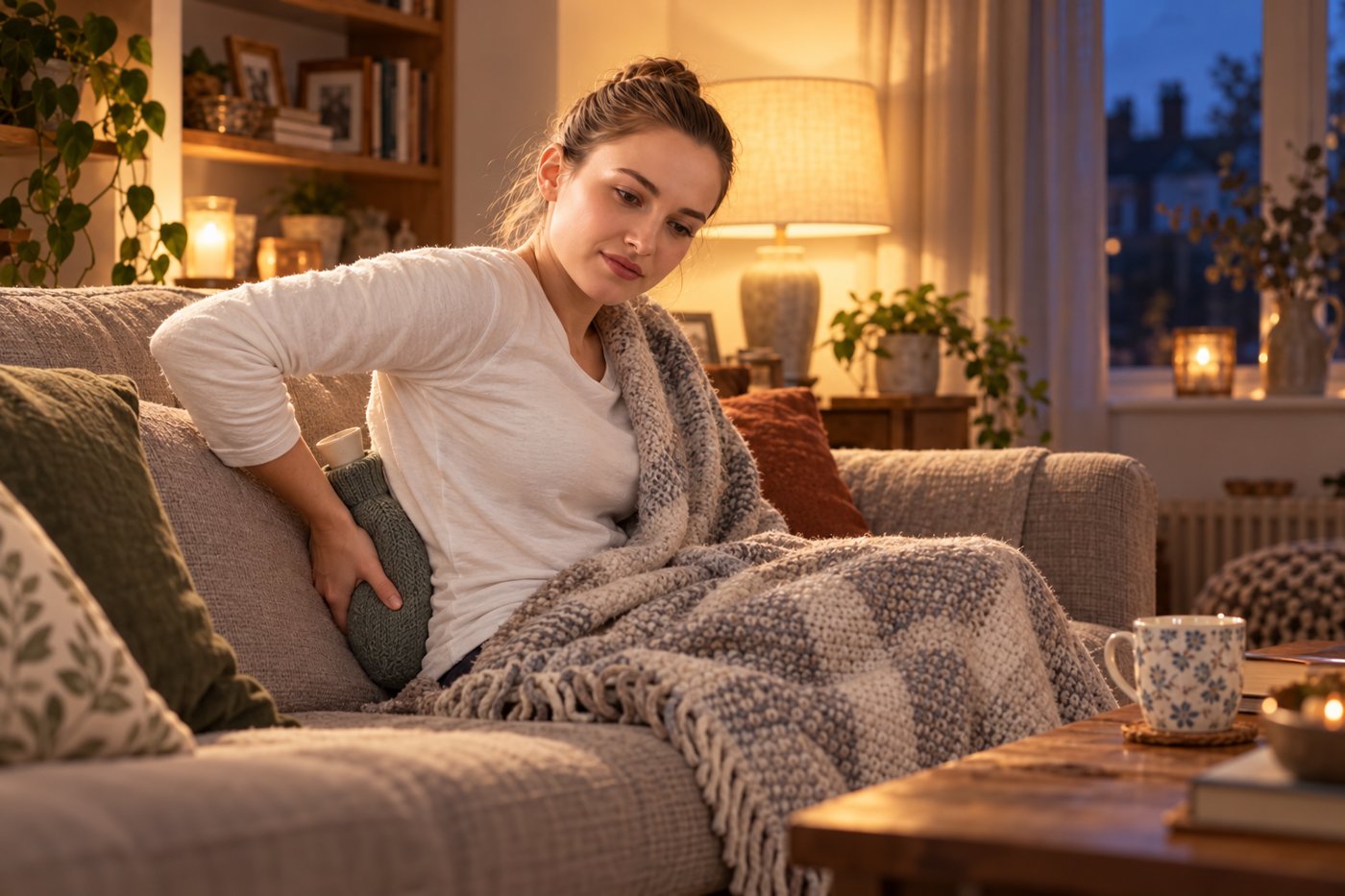
Like many of us, my first answer was a hot water bottle. Lovely for the first twenty minutes. Then it went lukewarm, then it went cold, and then I was either refilling it or wedging a clammy lump of rubber behind my back.
I even found myself sitting very still on the sofa so it wouldn’t slip. That’s not relaxing. That’s managing a hot water bottle.
Everything I tried first
I worked my way through the usual suspects, one at a time.
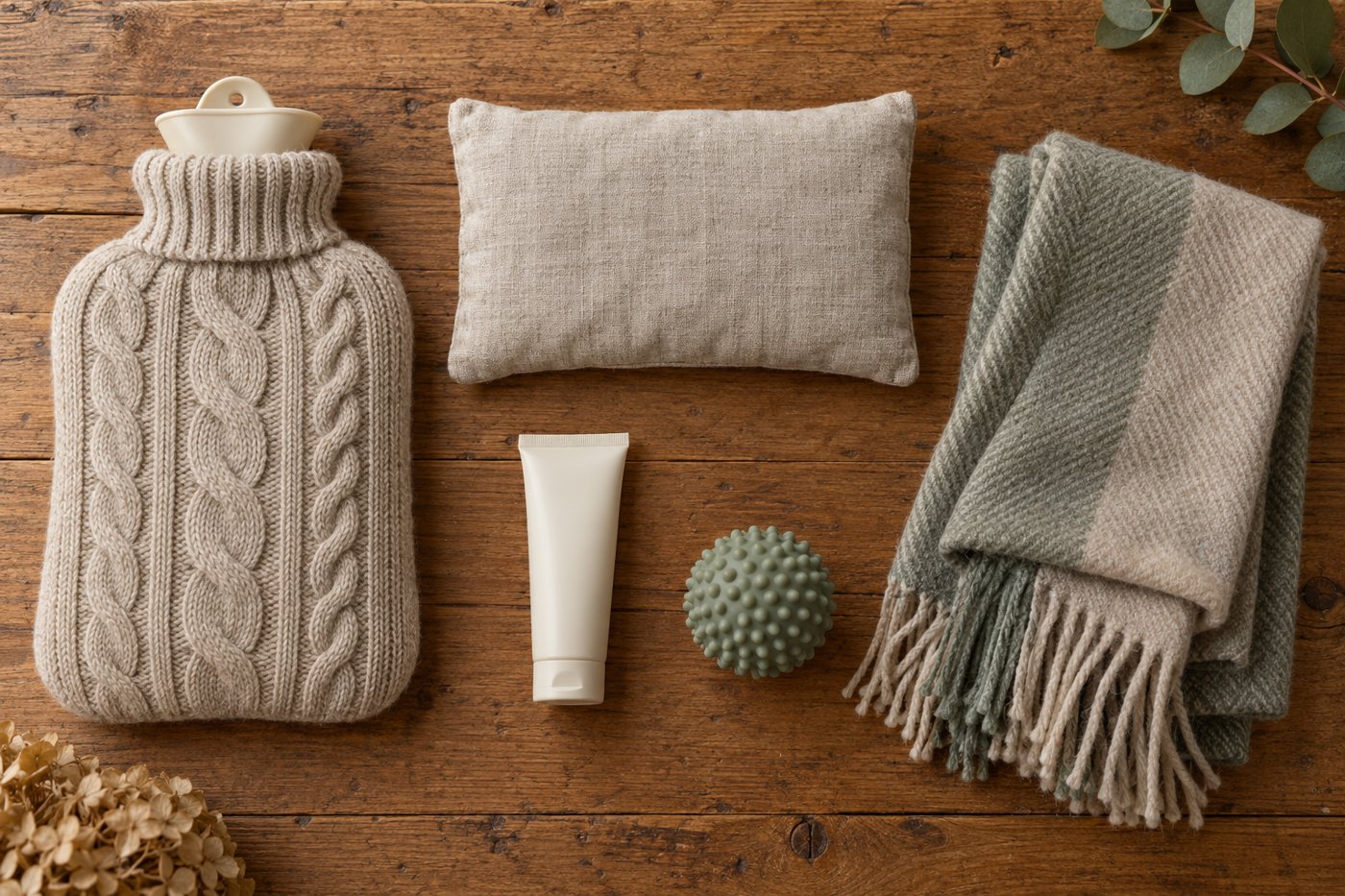
- Hot water bottleCosy at first, cold within the hour, and awkward to keep in place.
- Microwave wheat bagA good smell and a nice weight, but it cooled quickly and only covered a small patch.
- Warming gelsPleasant, but the feeling didn’t last through the evening.
- A massage ball and stretchesUseful, but I never kept up the routine once I was comfy on the sofa.
- An extra scarf and a thicker cardiganWarm enough, but my back and shoulders still felt tight.
None of these are bad ideas, and any of them might be right for you. They just weren’t the answer for me.
Pete’s idea
It was Pete who mentioned it one evening, watching me fiddle with the wheat bag for the third time. “Why don’t you get one of those electric heating pads? You plug it in, and it just stays warm.”
I thought they were only for people with proper injuries. But I did my homework, and here is what I found out.
Why warmth, in plain English
Warmth is one of the oldest comforts there is. Many people find that gentle heat helps tight, tired muscles feel looser and more relaxed, which is why hot baths, heat packs and hot water bottles have been around for ever. The research on heat for aches is modest, and it isn’t a cure for anything. But as a way to feel cosy and settle tense muscles at the end of the day, a lot of people like it.
The difference with an electric pad is simply that it keeps going. It doesn’t go cold on you, and you can adjust the temperature.
The one I decided to try
I settled on the Keplin Electric Heating Pad, which is sold direct on Keplin’s own website. A few things stood out to me:
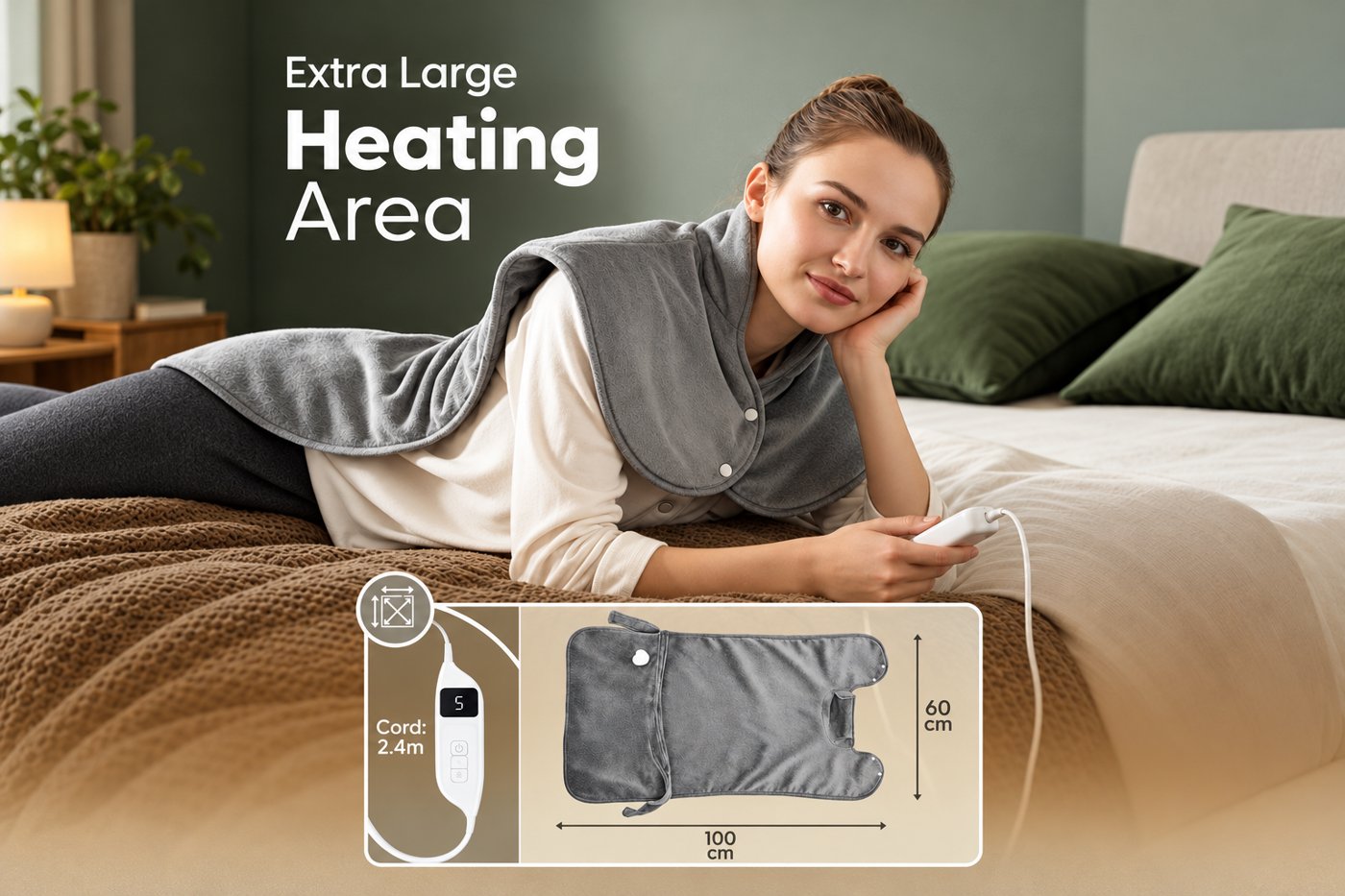
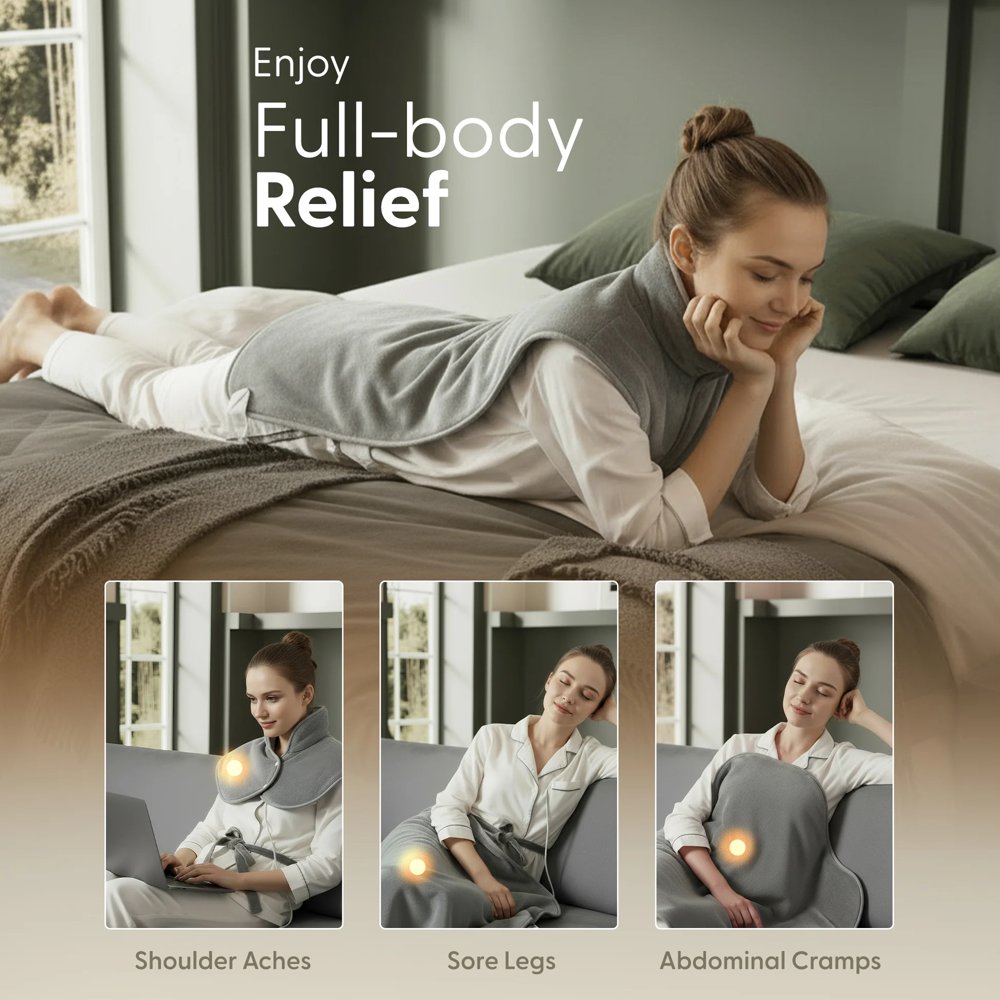
- Big enough to wrapThe large size is listed as 100 x 60 cm, and says it is designed to wrap around the back, shoulders, neck, legs or stomach.
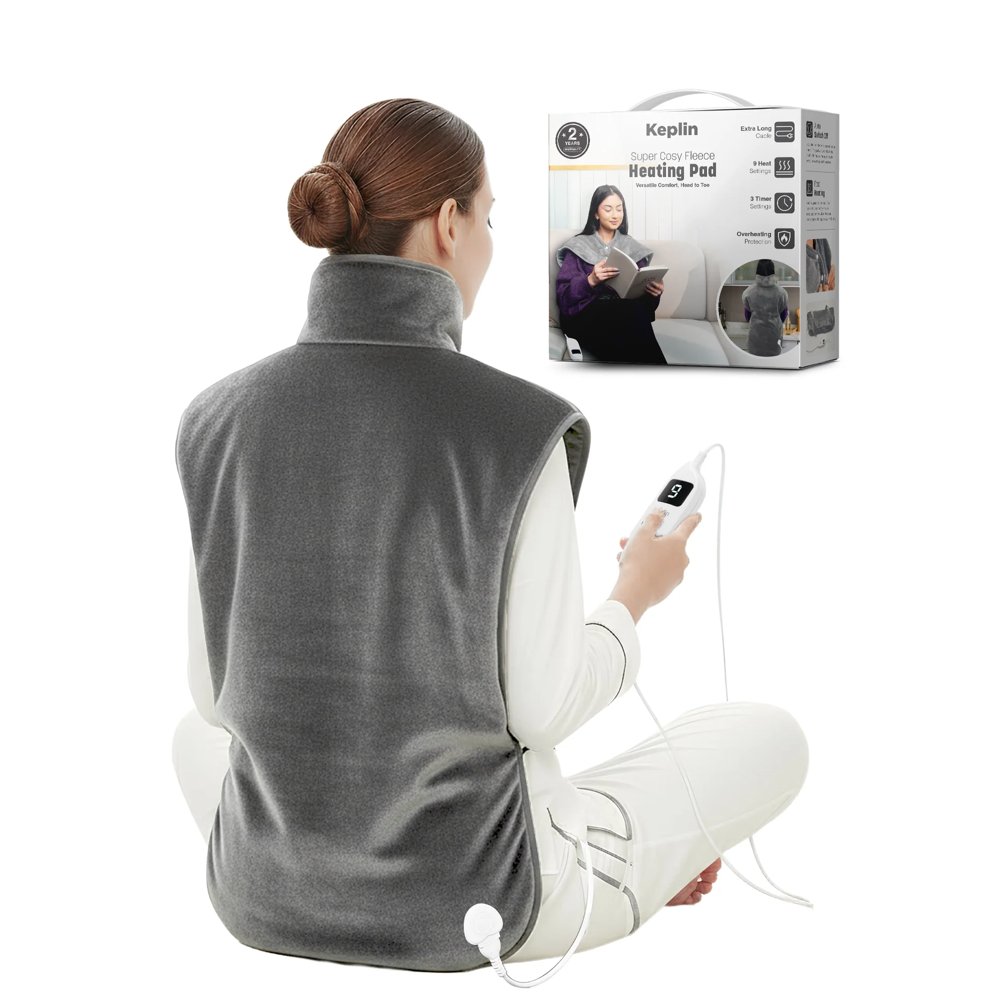
- 9 heat settingsThe temperature runs from 30 to 70 °C, so you can start gentle and go up a step at a time.
- Timer with automatic shut-offThree timer settings of 30, 60 or 90 minutes, and an automatic switch-off after 90 minutes, which mattered because I didn’t want something heating all evening.
- Overheat protectionThe page lists built-in overheat protection and a detachable controller.
- Soft flannel cover and a long leadA soft grey flannel cover and a 2.4 m power cord, so I could use it at the table or the sofa.
- Two-year warrantyThe page lists a 2-year warranty, which you register within 60 days of purchase.
The retailer describes it as intended for muscle aches, cramps, stiffness and tension. It is a comfort product, not a medical treatment, and I’d suggest reading the instructions and checking the details yourself, as I did.
Who should take care
This is the section I read twice. Heating pads are not suitable for everyone, and the usual advice is to speak to your GP or pharmacist first if you:
- Have diabetes or reduced feeling in your skinYou may not notice if it is too hot.
- Have circulation problems, a skin condition or broken or irritated skin
- Are pregnant, or are buying it for a child or someone who can’t tell you if it’s too hot
Whoever you are, follow the instructions, never use a damaged or folded pad, and don’t fall asleep on it. That’s why I liked the timer. When in doubt, ask. I did.
My first week
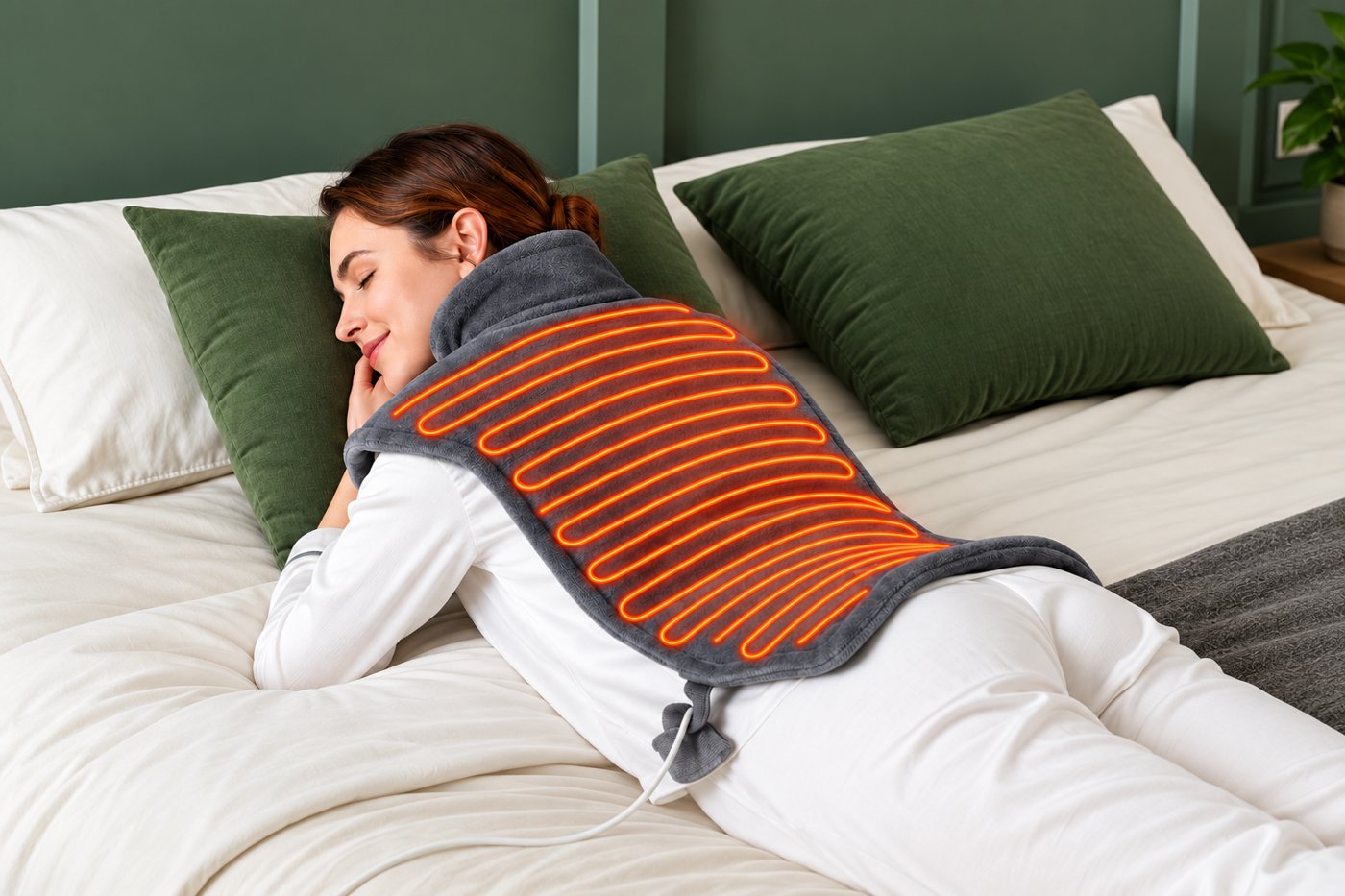
I started on a low setting, with the pad draped over my shoulders and a cardigan over the top, and turned it up one step at a time until it felt comfortably warm, never hot. That is the sensible way to do it, and I’d suggest the same.
I used the 30-minute timer at first. In the evenings, I moved the pad down to my lower back while I read on the sofa. By day four or five, it had become part of the routine, like putting the kettle on. And it simply stayed warm. No refilling, no cold lumps, no sitting still to stop it slipping.
What Pete said
About two weeks in, I was sitting on the sofa with the pad across my shoulders and a cup of tea, and Pete looked up from the paper. “You haven’t rubbed your neck all evening,” he said.
I hadn’t noticed. I wouldn’t say it fixed everything. Some afternoons at the table are still long, and everyone’s experience is different. But my evenings felt cosier, my shoulders came down from around my ears, and I stopped thinking about the hot water bottle.
Is it right for you?
I’m not a medical professional and I can’t answer that for you. Here is the checklist I wish I’d had.
May be worth a look if…
- Your shoulders, neck or back feel tight and tense at the end of the day
- You like gentle warmth and a hot water bottle never stays warm for you
- You’d like an adjustable temperature and a timer
- Your GP or pharmacist has no concerns about you using a heating pad
Talk to your GP first if…
- You have diabetes, reduced feeling in your skin or circulation problems
- You are pregnant or have a skin condition
- Your pain is severe, sudden or getting worse, or spreads down an arm or leg
- You are unsure about using any heated product
See the Keplin Heating Pad offer
You will go to the retailer’s official page, where the current price, availability, delivery details and returns terms are shown.
- ✓9 heat settings, 30–70 °C
- ✓Auto shut-off timer
- ✓Free standard delivery
- ✓30-day returns & 2-year warranty
My advice, from one tight pair of shoulders to another
If your evenings are being shrunk by aches and tension, don’t just put up with it like I did. Speak to your GP or pharmacist first, especially if anything about your symptoms worries you. Then, if gentle warmth appeals to you, it can be a simple, cosy way to wind down.
For me, it was the difference between a night spent bracing against the cold and a night on the sofa, properly relaxed, and I’ll take that.
Ready to take a look?
Review the current price, size, heat settings and returns policy on the retailer’s official page.
- ✓9 heat settings, 30–70 °C
- ✓Auto shut-off timer
- ✓Free standard delivery
- ✓30-day returns & 2-year warranty